
The key difference is how much your reader needs to know
A flyer is a single sheet built around one clear message. It is useful when people need to understand an offer, event or service quickly. A brochure uses folds and panels to organize more information, so it can introduce a business, explain several services or help a customer compare options.
Neither format is automatically better. The right choice depends on what your audience should do after reading and how much information they need before taking that next step.
Use a flyer for a focused message
Flyers work well for a store opening, a limited-time promotion, a local event or a short list of services. Because the format is compact, lead with the most important point: what is being offered, who it is for and how to respond.
Plan distribution at the same time as design. A flyer handed out in person, placed at a counter or included in a delivery should be easy to scan in a few seconds. Use a visible heading, concise copy and a clear phone number, website or call to action.
Choose a brochure when the story needs structure
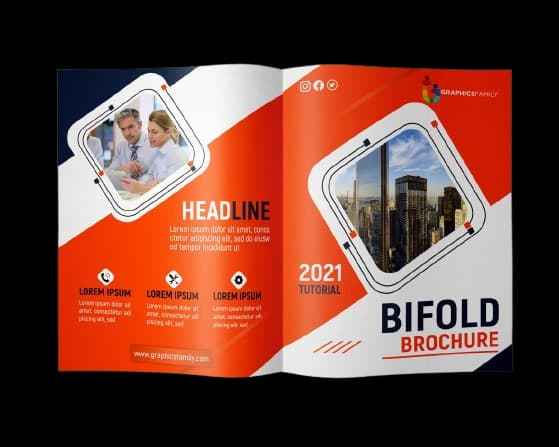
A brochure gives you room to build context. Its panels can introduce your business, explain benefits, show a range of products and end with contact details. That extra space is useful when customers need more than a headline before they can make a decision.
Treat the folds as part of the reading order. Map out the front cover, inside panels and final contact panel before writing the finished copy. Keep each panel focused so the brochure feels organized rather than crowded.
Plan the design around the print format
For either format, use high-resolution images, strong contrast and type that remains readable at the final printed size. Keep key text clear of trimming edges. For a folded brochure, check that the artwork accounts for the fold positions and that panels appear in the intended sequence.
Ask for a digital proof and review it as a physical reader would: at normal size, in the order the piece will be opened or handed over. Check spelling, prices, dates, links and phone numbers before approving production.
Compare total campaign cost, not just the unit price
A flyer is often economical for broad distribution, while a brochure may be more useful for appointments, counters or sales conversations. Compare print quantity, paper choice, finishing and how the material will be delivered to customers.
If you are unsure which format fits, start with your campaign goal and audience. A printer can help you compare sizes, folds and quantities while keeping the message and budget in view.